Improving energy performance

ENVIRONMENT

Guaranteeing and optimising equipment performance

In the context of a global and widespread drive to reduce the carbon footprint of human activities, energy saving is one of the key levers for limiting the environmental impact of any industry. While the use of certain levers is obvious (use of alternative energies for processes, optimisation of transport, etc.), water quality is often overlooked or even completely ignored.

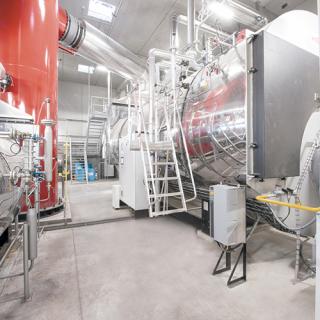
Yet the quality of water (particularly for utilities) has a major impact on energy requirements: good quality water, for example, limits scaling, corrosion and clogging in installations (steam boilers, cooling towers, closed circuits, etc.), improves efficiency and therefore optimises energy consumption.


Protecting installations: higher yields and reduced energy requirements

By means of (usually combined) physical or chemical treatments, the water in boiler rooms, cooling towers and closed circuits benefits from physico-chemical qualities (hardness, pH, conductivity, alkalinity, suspended solids content, etc.) capable of preventing or limiting the formation of mineral or bacterial deposits. 

Not only is the industrial equipment preserved, but its maintenance is simplified and its performance remains intact over time, thus avoiding any over-consumption of energy due to its components becoming clogged. 

Among the most effective upstream physical treatments, reverse osmosis almost completely demineralises the water. For utility water in particular, this makes it possible to increase concentration ratios and boost performance without consuming additional energy.

At BWT we support you

Innovation for decarbonation

In order to develop the most appropriate solutions for your site, BWT offers you a fully integrated chain of skills for industrial water treatment. Depending on the configuration of your site and your equipment, we adapt the treatment of utility water so that it contributes to optimising the performance and energy efficiency of your industrial facilities.

BWT offers you comprehensive technical, regulatory and financial support, helping you, for example, to put together applications for EEC funding.

Our customer references

Win-win partnerships

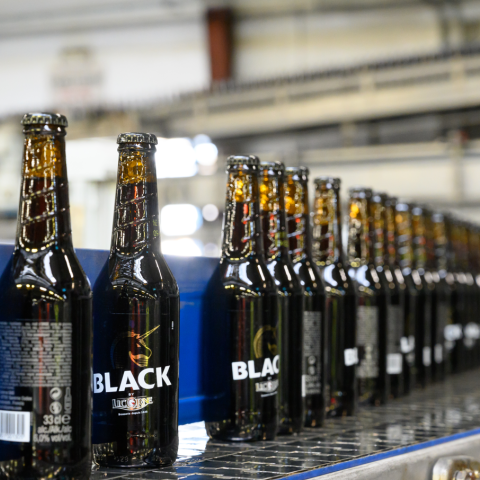
traitement eau Brasserie Licorne

BRASSERIE LICORNE BREWERY
Reducing carbon footprint and water consumption

As part of an energy management project for production, Licorne wanted to improve the quality of the water entering the boiler, which produces the steam needed to heat the brewing tanks and whose water treatment was provided by a softener.

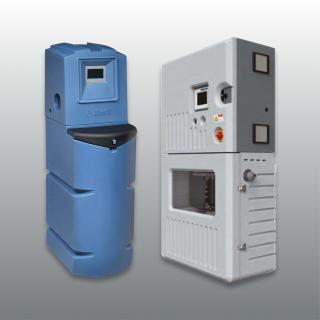
By installing an osmosis unit at the steam boiler inlet ( OPTIVAP solution with ESC), our customer reduced its annual gas consumption as well as its water consumption.

Results: - 500 MWh per year, i.e. 10 tonnes of CO2 not emitted into the atmosphere and 60% less water used

références clients industriels traitement eau

A PARTNER AT YOUR SIDE
They place their trust in us

For many years, our customers have placed their trust in us to optimise the treatment of their industrial water and their industrial, water, energy and environmental performance.

With a unique, integrated chain of skills, we are building genuine, long-term partnerships.

Discover some of our customers' experiences, combining expertise, performance and proximity...

Our news

The latest news from BWT Industrie

emission b smart

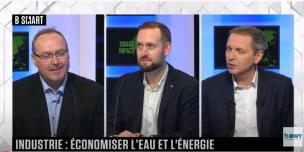
NEWS - Replay the B Smart programme with Brasserie Licorne

Thanks to its new osmosis unit, our customer Brasserie Licorne is further reducing its environmental impact. The installation saves 15 m³ of water a day and reduces annual gas consumption by 500 MWh. Find out more in the replay of the B Smart channel’s Smart Impact programme with Thomas Hugues.

guide technique vitagora vapeur

DOCUMENTATION - Technical Guide: Industrial Steam

Optimising water treatment and energy efficiency: why take an interest? Regulatory context, technical solutions and grants. Published in collaboration with VITAGORA and the Burgundy - Franche-Comté Region.

les CEE en questions

DOCUMENTATION - Technical Guide: Energy Savings Certificates

What is an Energy Savings Certificate? What equipment is eligible for ESC? What support is available from BWT? This guide provides all the answers to these questions, with the participation of ATEE - Club C2E, EDF and ANIA.

Intervention ania

BLOG - Questions about Energy Savings Certificates

Since 2005, ESCs have been used to finance operations designed to reduce energy consumption in a wide range of business sectors, as well as in the residential sector. Despite the (relative) age of the scheme, successive changes have not made it any easier to understand.