Reducing water withdrawal
Cristal Union
By reusing the water naturally contained in sugar beet, the sugar manufacturer reduces its water withdrawals from the natural environment by 57%

Sugar industry
Filter and recycle water by osmosis to limit water withdrawals
For many years now, the cooperative group, one of Europe's leading producers of sugar, alcohol and bioethanol, has been committed to a voluntary policy of sustainable development and the circular economy.
With more than 2,000 employees and 9,000 cooperative members (farmers), the sugar group has made saving and making the most of precious resources such as water and energy a priority. To this end, the sugar refinery has embarked on a process of transforming its industrial sites to meet these challenges.
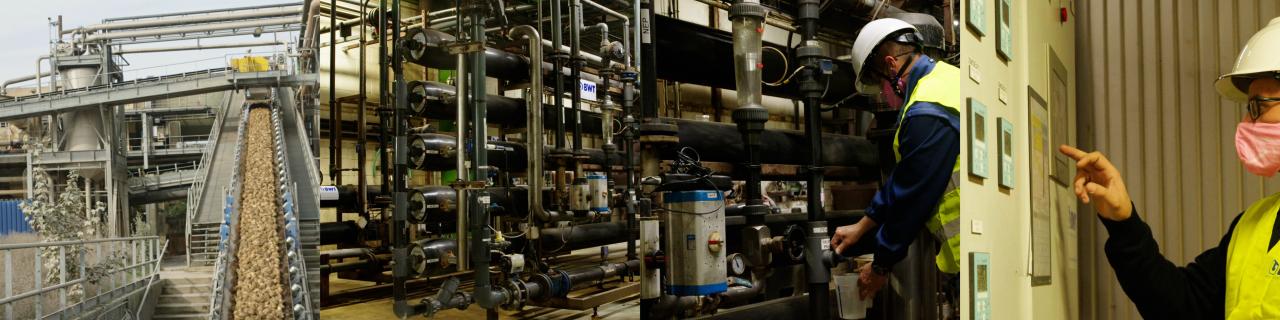
Watch our customer testimonial video
In just a few minutes, find out how we support our customer's industrial water treatment day-to-day.
The issues
Reducing water extraction from the natural environment by reusing water in processes
During the production of sugar, alcohol and ethanol, two stages in the sugar process are particularly water-intensive: washing the beet as it enters the factory and extracting the sugar.
At its Bazancourt (51) site, Cristal Union has decided to use the water naturally present in the beet for the washing and extraction processes, in order to limit the amount of water it withdraws from borehole water. This water has to be treated before use.
The solution
Pre-treatment and recycling of water by osmosis
To meet these challenges, the BWT teams installed two osmosis units at Cristal Union, with pre-filtration and a recycling osmosis unit to treat the water recovered during the sugar juice concentration and syrup crystallisation processes.
The water in the plant is now recovered and reused, after being treated, to wash the beet and extract the sugar, as part of a virtuous circle. For several years now, the Champagne site no longer draws water from boreholes for its beet harvesting and sugar production activities.
Every year, once the beet campaign is over, excess water is stored in ponds near the sugar refinery and used to irrigate neighbouring agricultural plots, helping farmers during the summer months in this region, which is regularly affected by water stress.
The approach implemented by the Bazancourt sugar refinery has also enabled the ecosystem of neighbouring factories integrated into the industrial area to reduce consumption and overall withdrawal of water from the natural environment by more than one millionm3 per year.

Customer testimonial
Find out how we support our customers in their industrial water treatment.
100% of beet water reused
" Beets contain more than 70% water: a property that was once considered a disadvantage, but has now become an asset for us," says Jannick D., Head of the Heating/Dehydration Sector at Cristal Union. “By setting up this internal reuse process, we are able to obtain very high quality water, which considerably reduces the volume of water we draw from the aquifers. For several years now, Cristal Union Bazancourt has not drawn water from boreholes for its beet campaign and sugar production operations.“
Since 2011, almost 400,000 m3 of water have been treated each year on the production site so that it can be recycled in the process, representing a total of more than 4 million m3 of recycled water since the partnership with BWT was set up. Over the last decade, the Cristal Union Group has thus reduced its overall water withdrawal from the natural environment by 57%”.
" The reduction in our water consumption during the processing phase, and more generally in our environmental impact, is the fruit of a comprehensive CSR approach launched by the Group more than ten years ago. This approach, which takes climate change into account, reflects our desire to reconcile the economic and environmental performance of our facilities. Water is a precious resource, so it's important for us to manage it sparingly," explains Michel M., CSR Director for the Cristal Union Group.
" The circular economy approach is a priority for our group. We take care to protect one of the most precious resources of all, water," adds Jannick D. "That's why we've modified our tools so that we can reuse 100% of the water contained in the plant on a daily basis.“
NEWS
The latest information and documentation from BWT Industries

NEWS - L'Oréal Libramont: the plant that never wastes a drop of water
The L'Oréal Libramont plant has installed a closed-loop water recycling system, considerably reducing its environmental impact. Find out how BWT supported L'Oréal in this ambitious and inspiring project.
NEWS - Plug&Reuse: BWT's mobile solution for recycling industrial water
A technology that can be adapted and tested on site, enabling manufacturers to optimise the reuse of their effluents while reducing their environmental impact.

NEWS - Hydrogen: interview with Laurent Daisne
Following BWT's participation in the Hyvolution trade fair, Laurent Daisne, Sales Director for Industry and Tenement and Service Buildings, answers 3 key questions about ultrapure water for hydrogen.