Maintaining water quality without compromising the environment
BWT has mastered a number of methods for saving chemicals in industrial water treatment, including osmosis, the use of more concentrated products, technical optimisation and the use of alternative products.
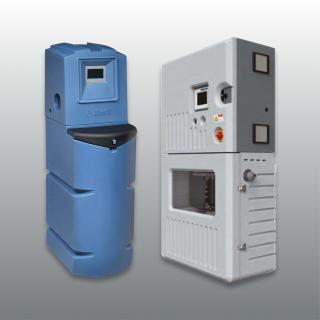
In the case of treatment with biocides, electrochlorination, i.e. the on-site production of a chlorinated disinfectant solution by salt electrolysis, is a healthy and effective alternative to chemical biocides. For over 12 years, this technology has proved its effectiveness against conventional biocides for disinfecting water, controlling Legionella in air-cooling systems (ICPE 2921) and microbiology in process water. The freshness of the solution is guaranteed, with no loss of quality, unlike solutions previously manufactured and then delivered on site. What's more, as well as reducing the need for transport, and therefore energy consumption, this solution means that employees do not have to handle chemicals.
In addition, the use of eco-responsible products (biodegradable, non-toxic, phosphorus-free, azole-free and, in time, biosourced), developed as part of BWT's Green Chemistry strategy, enables manufacturers to reduce their environmental impact and meet increasingly stringent standards.
Adopting a global approach to reduce consumption
For BWT, the future undoubtedly lies in combining several treatment techniques across the entire water cycle, in order to get the best out of each of them, and to achieve an optimum efficiency-environment-cost ratio: physical processes (membrane filtration, UV, reverse osmosis, etc.), conventional chemistry and green chemistry are complementary, and it is by combining them that industry will be able to reduce its environmental footprint without sacrificing water quality.